In 2013, the renewal of the area began as one of the elements of the third Danube Trail. Gergő Kukucska, a member of Valyo, wanted to find the worst Danube‑side location in Budapest and rehabilitate it.
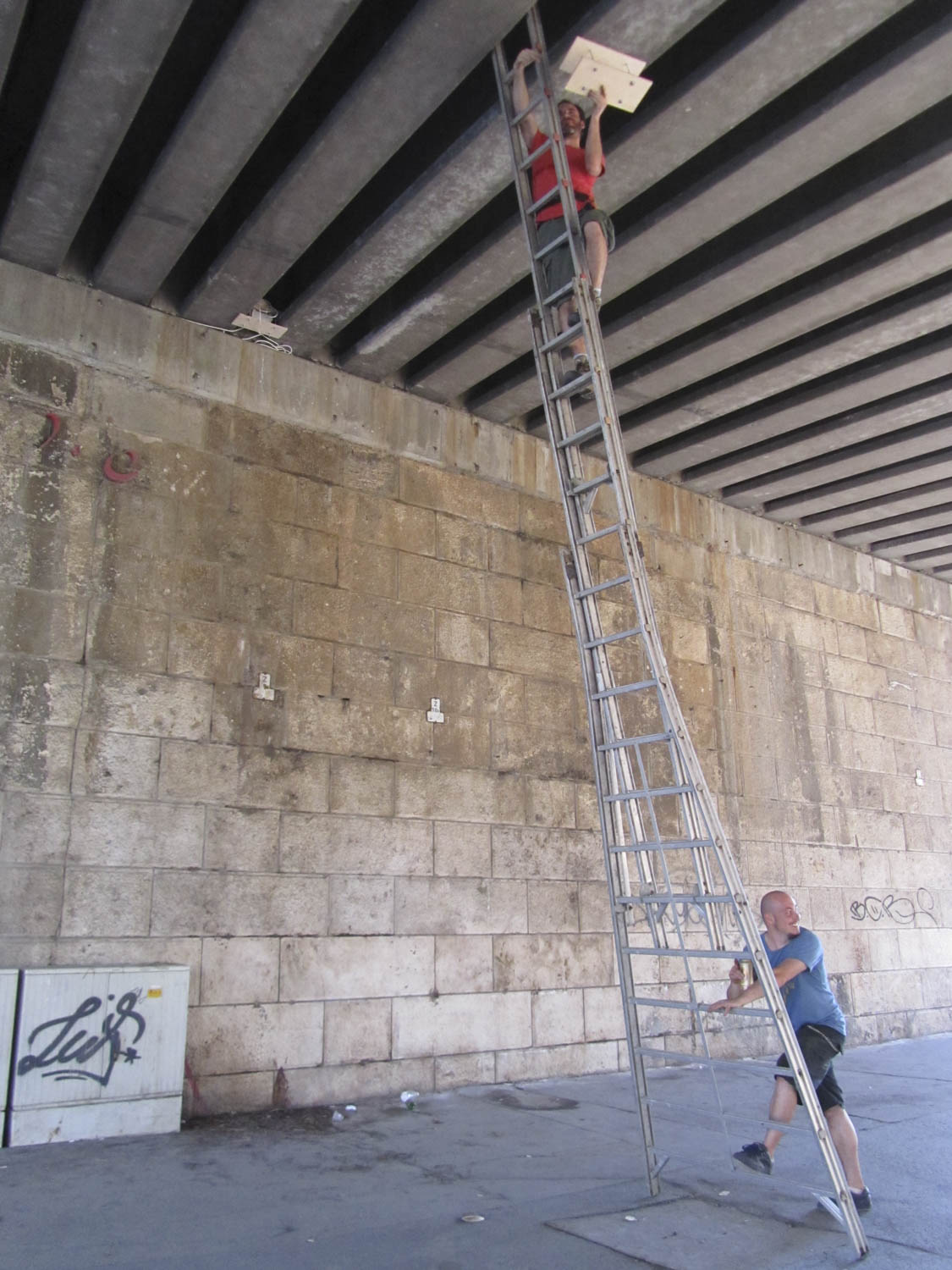
In 2013, the area under the Pest bridgehead of the Petőfi Bridge was a dark, dusty toilet. According to Gergő’s concept, if we illuminate this area, fewer people will use it to relieve themselves, and if the lamps also shape our spatial perception through some artistic, interesting solution, a different kind of use may emerge.
Water was placed in the bottoms of the eight industrial‑style lamps attached to the bridge; the lamps sensed the movement of passers‑by and began to move themselves, projecting water patterns onto the black asphalt. The light and the informal control created by it kept urinators away, and the place began to appear as a more civilised area. The closing event of the three‑month project was a party combined with light painting that attracted several hundred people—something unimaginable at this location just a few months earlier.
Light and sound
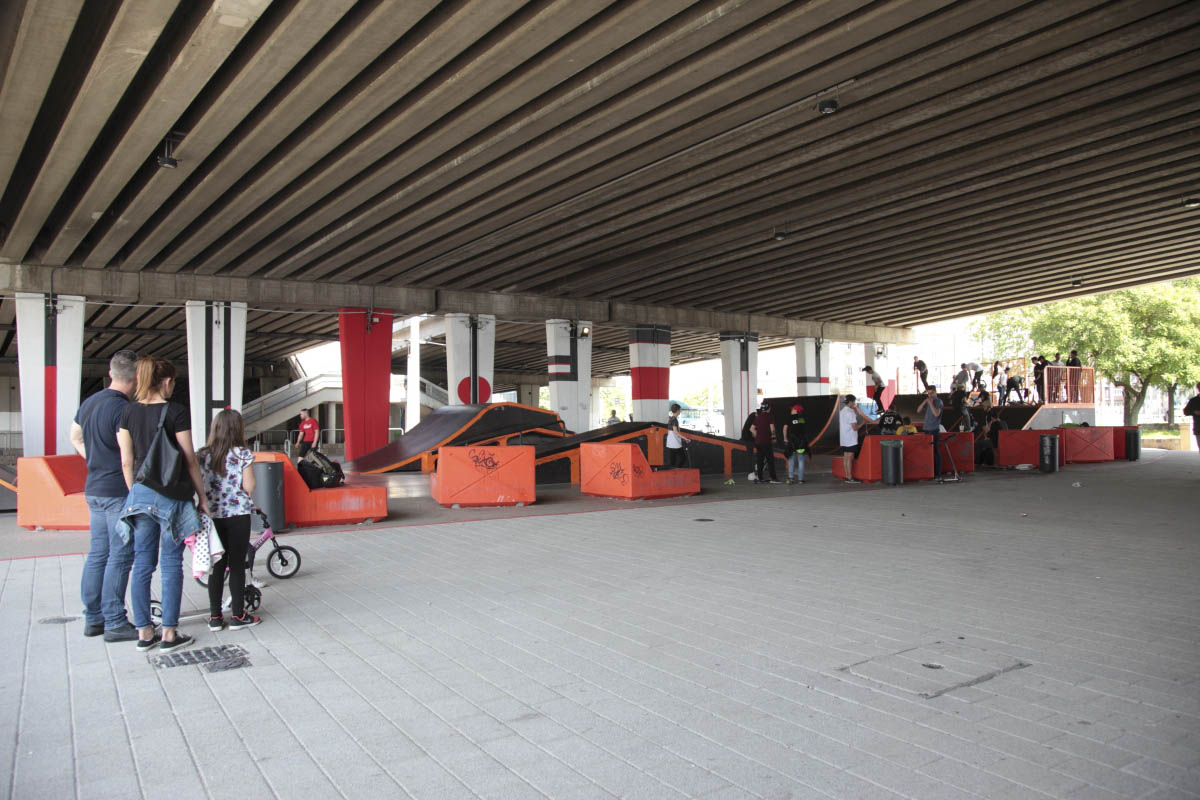
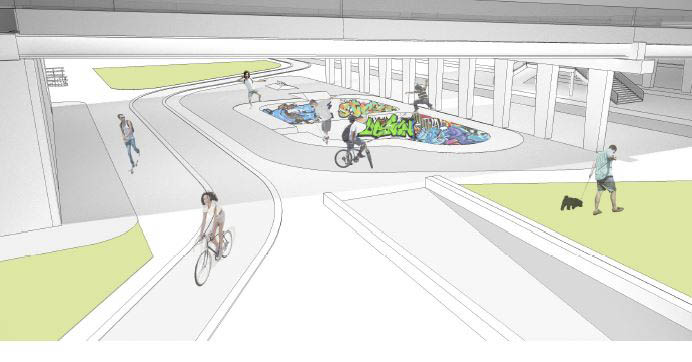
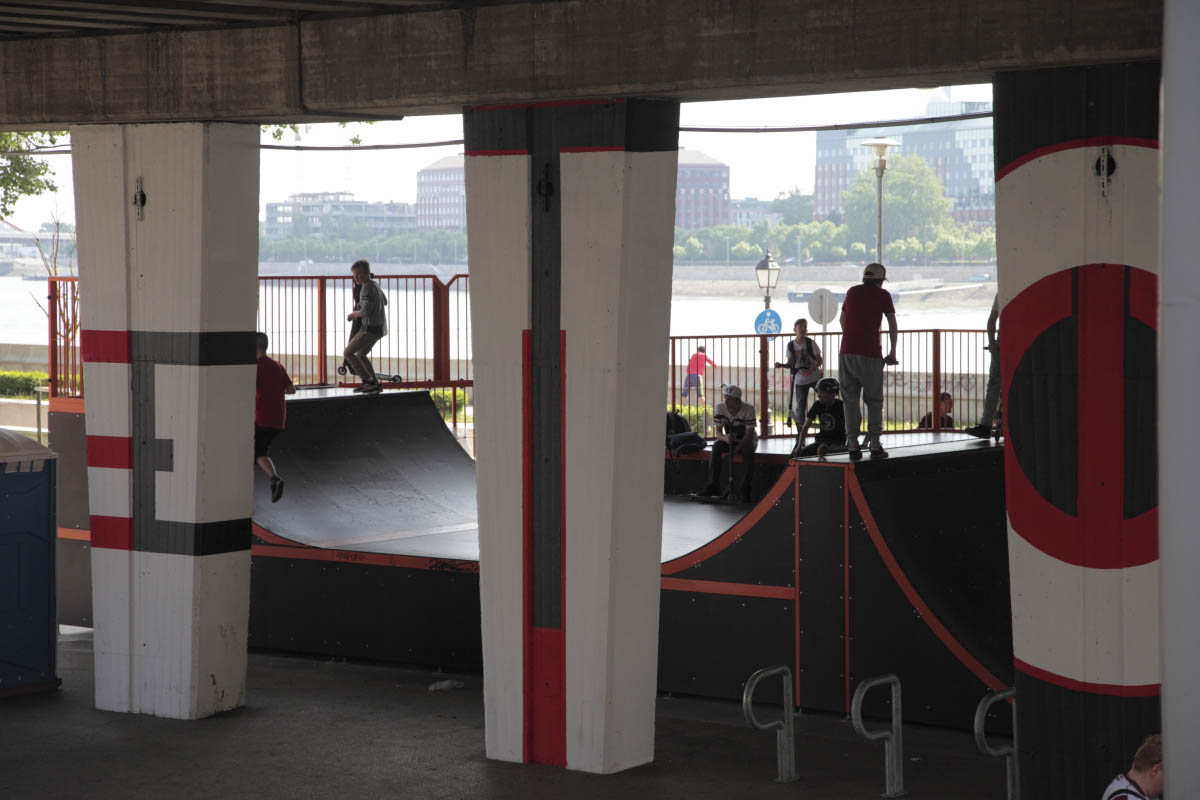
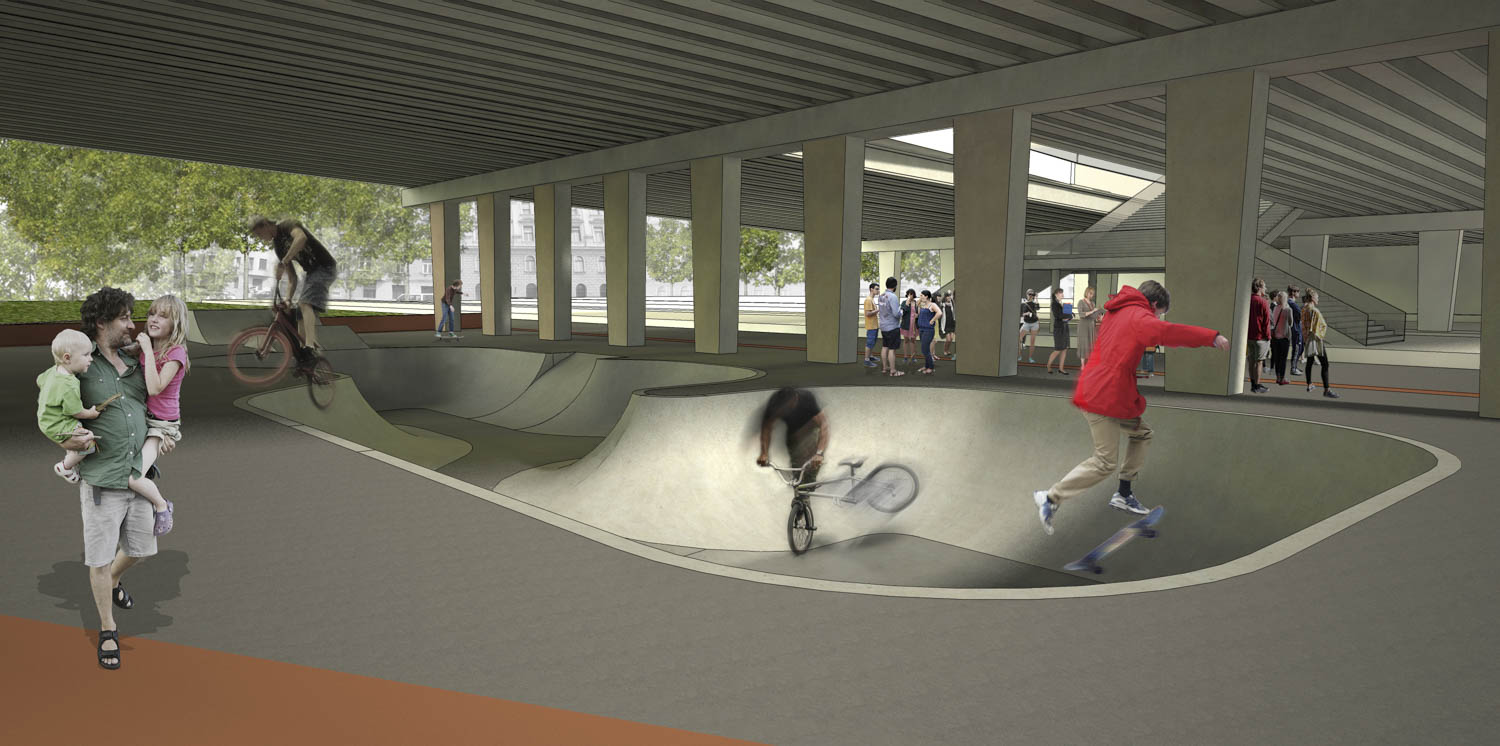
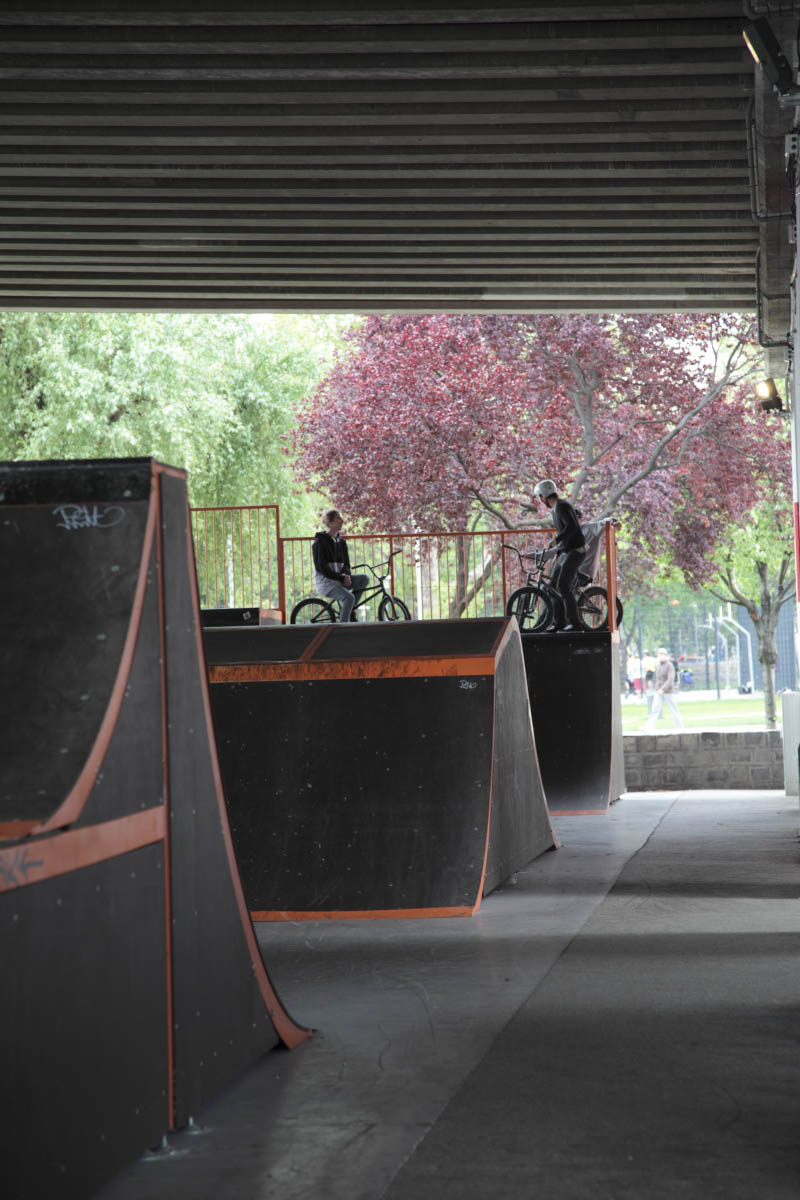
In connection with the renewal of Nehru Park, the development of the area began. The strong noise of the heavy vehicle and tram traffic passing over the bridge did not allow for long stays under the bridge. A function had to be found for the area that would not be disturbed by the noise. Skateboarders and other extreme sports athletes often train with headphones and are noisy themselves, so we decided to develop an extreme sports park. We designed the elements of the park in consultation with several associations.
During this period, the development of the park became stuck in the maze of municipal development processes. The inauguration ceremony finally took place in 2016, on the ramp constructed by S‑tér.
Thus, Budapest’s first—and still only—covered skate, BMX and scooter park was created, which has been in continuous use ever since, winter and summer, day and night, with extremely high occupancy.
Project participants: Gergő Kukucska, Dávid Varga