Have you ever wanted to get down to the Danube bank but as you got close to the water with great difficulty, you just stood there waiting for the cars to pass and the green signal so that you could continue your journey to the next crossing? When you did cross, you had to balance behind a railing so as not to fall off the high embankment. Once you had successfully overcome this obstacle, you could finally go down the worn, rickety stairs to the water.
The situation described above is a serious shame in Budapest, a city that otherwise we can be increasingly proud of. We have been working for years to make it easy for everyone to touch the Danube, because we believe that the river is nature itself, which belongs to everyone equally. But especially to city dwellers, who spend the most time here.
“If we don’t apply, we might as well break up.”
It was no question for us that we would enter the RAK-PARK design call announced by the Municipality of Budapest, which aimed to eliminate the difficulties described above. As a civil society organization with expertise in the subject, we welcome the city government’s steps in this direction. We have long wanted to formulate what changes we would most like to see on the Danube bank in downtown Pest. This call provided an excellent framework for this, for which we invited young professionals to be co-authors who, in one way or another, also have something to do with the Danube. We would certainly have approached the topic differently if it had not been for the call’s regulations, which we complied with to the fullest extent, but at the same time it was also an advantage for us that there were laid down principles that we had to specify with our own thoughts.
Thanks to Mahart Passnave, we were able to prepare our well-thought-out plans right in the office on the Danube bank, where we were constantly inspired by each other’s work and could walk out to check out a location in question at any time.
We followed these principles during the design:
How do we imagine the Danube banks?
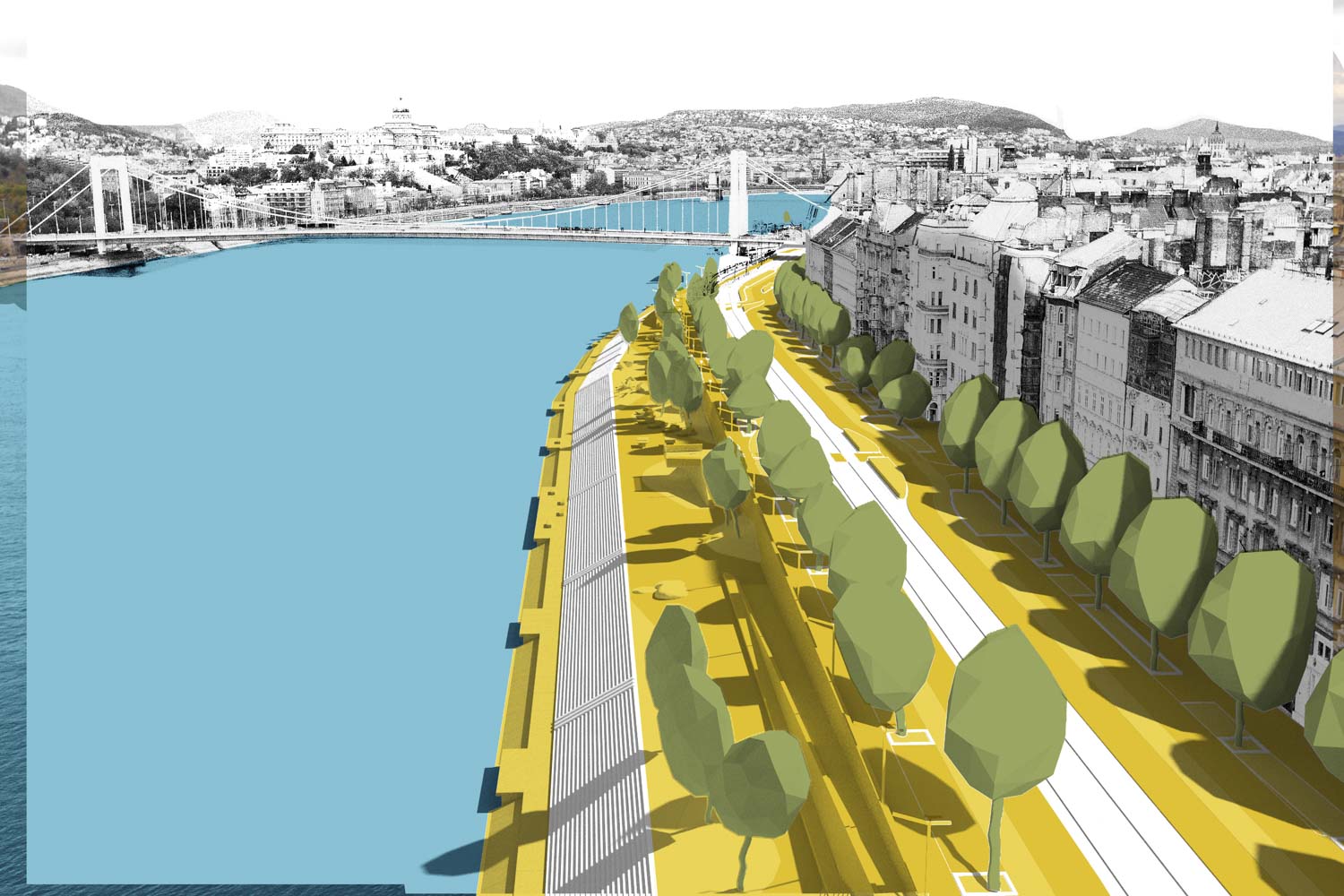
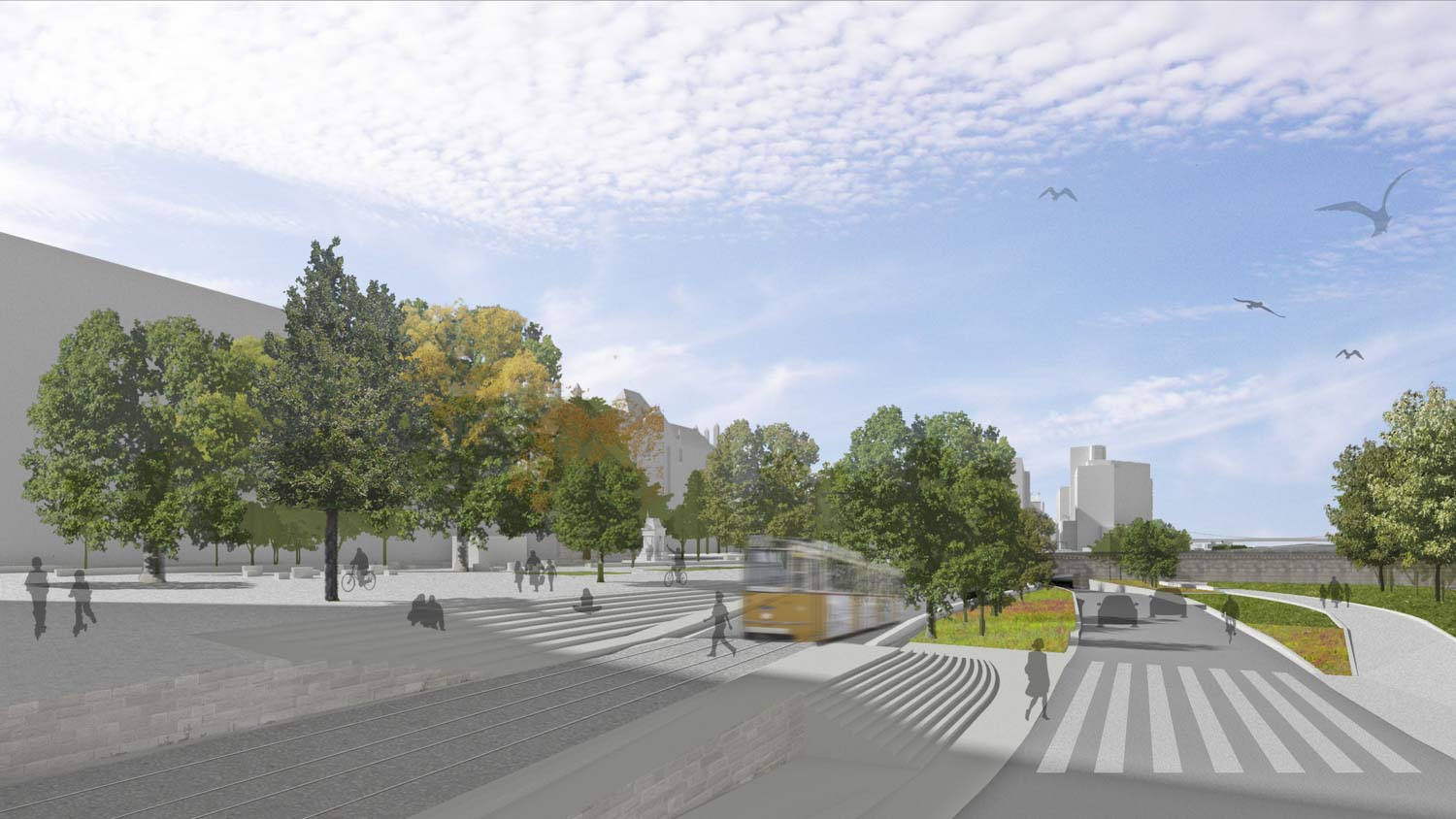
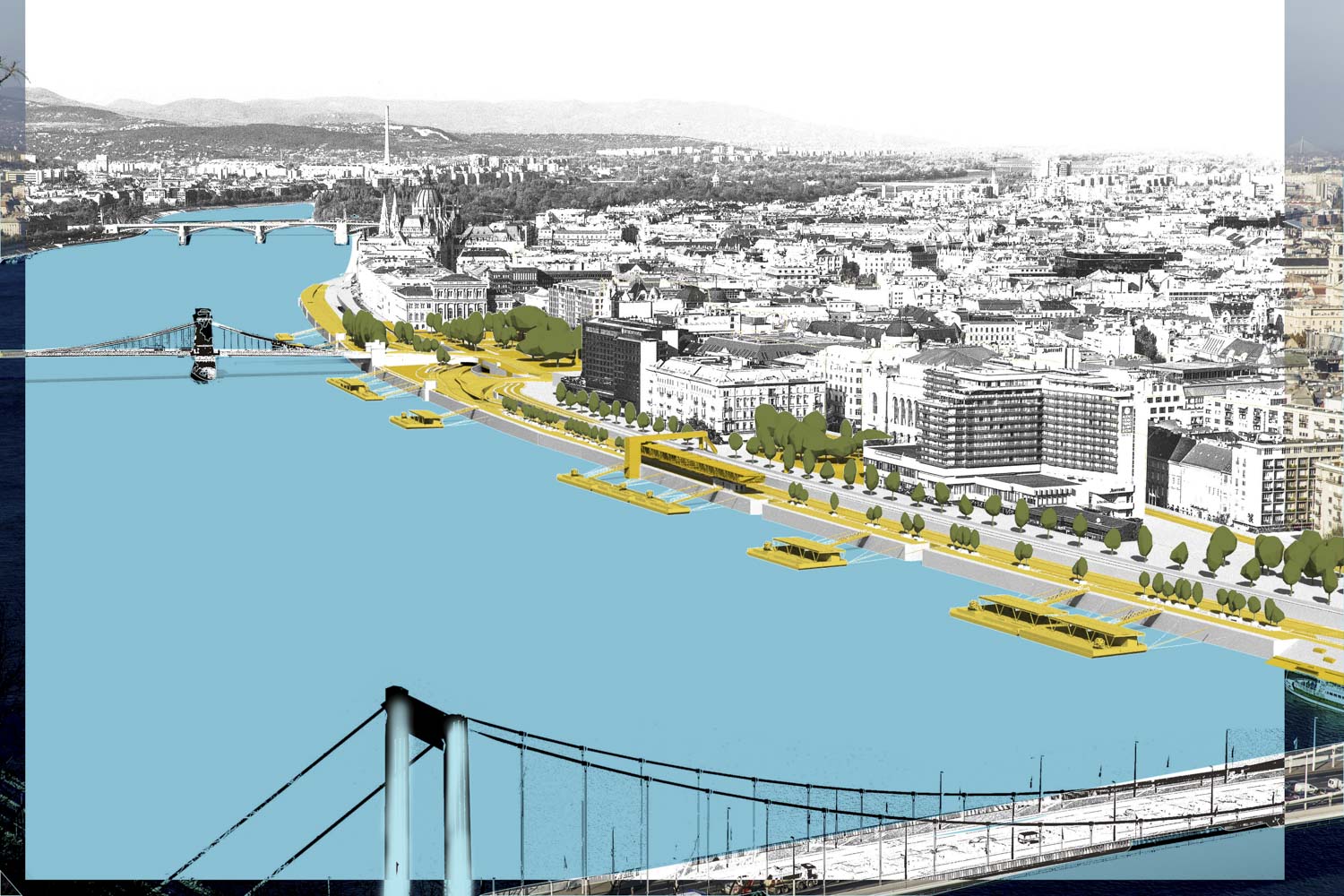
We planned the largest possible green space on Széchenyi Square, which can be created while ensuring uninterrupted traffic. We designed interactive parts, a water feature for the new square, which is easily accessible from all directions, and connected it with a wide staircase to the parks on the waterfront, which we kept in their entirety. We completed the space defined as the Main Square on the Danube bank of the city with floating restaurants.
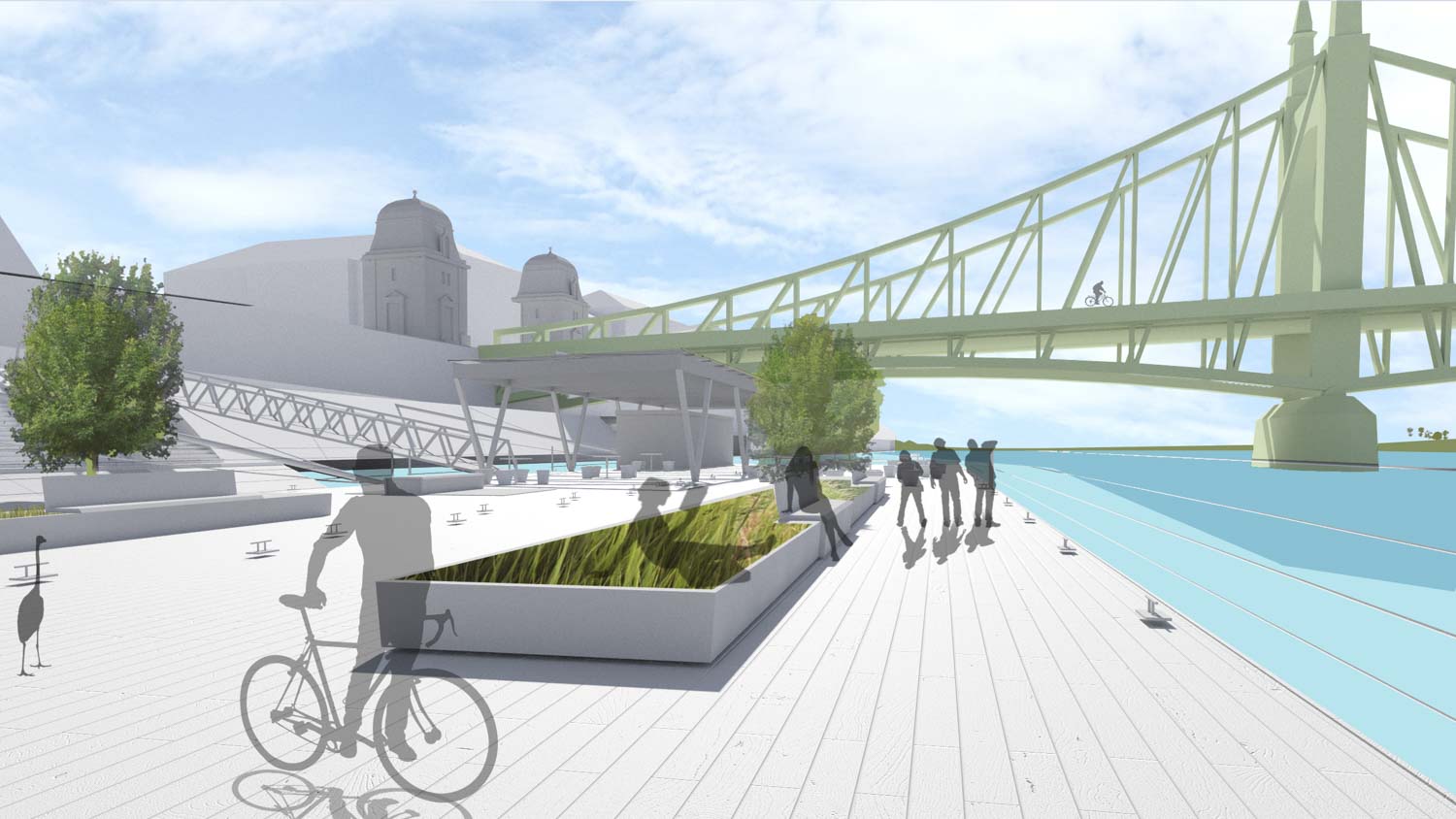
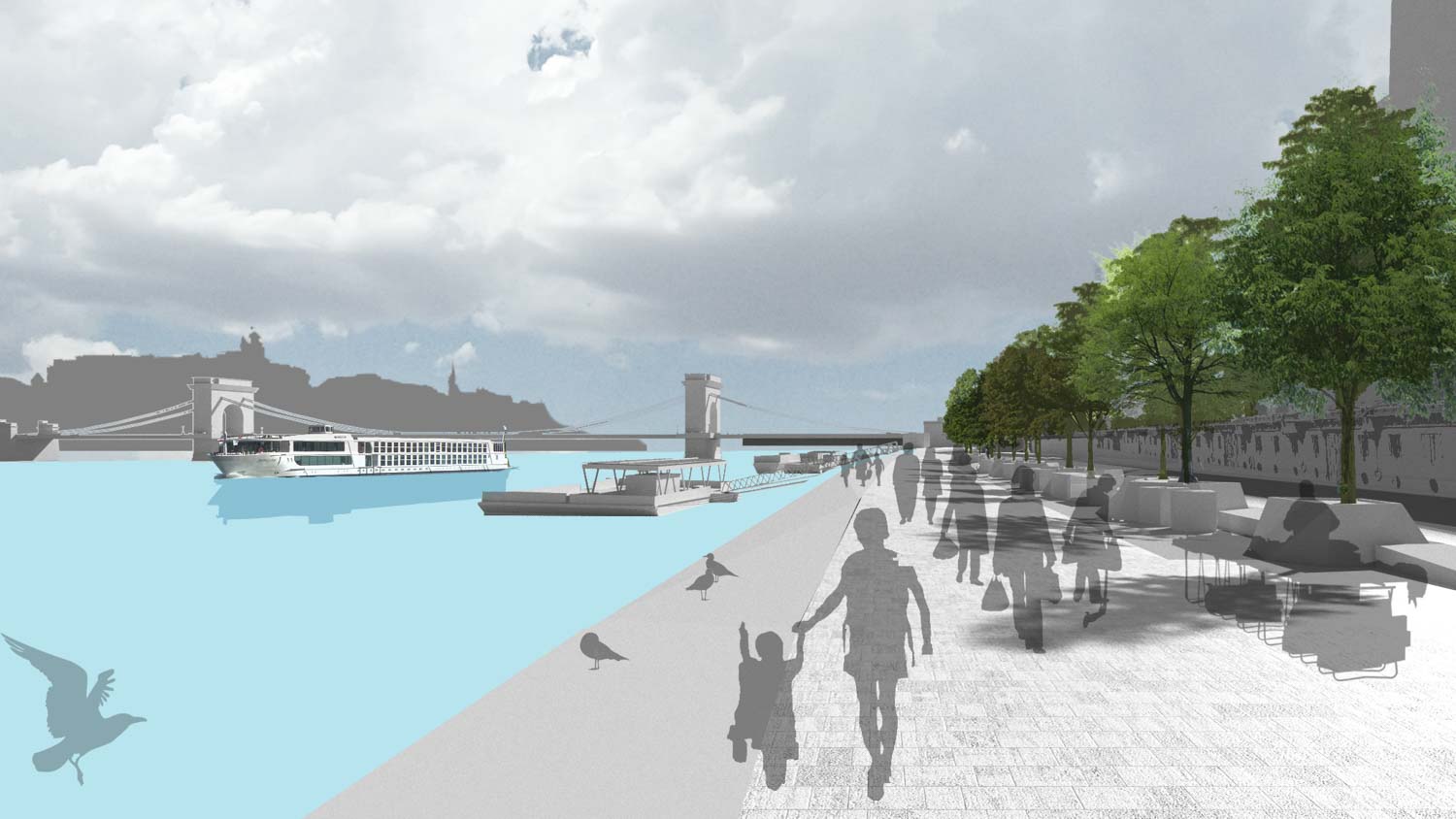
We did something similar on the Belgrád Quay. According to our research, people who come to the waterfront are primarily looking for nature, which is why we created a new 8,000 square meter recreational public park for them, the same size as the Károlyi Garden. The park is located on three levels, with three walkways. In the new, flood-proof public park, made of natural materials, you can directly touch the water along 400 meters.
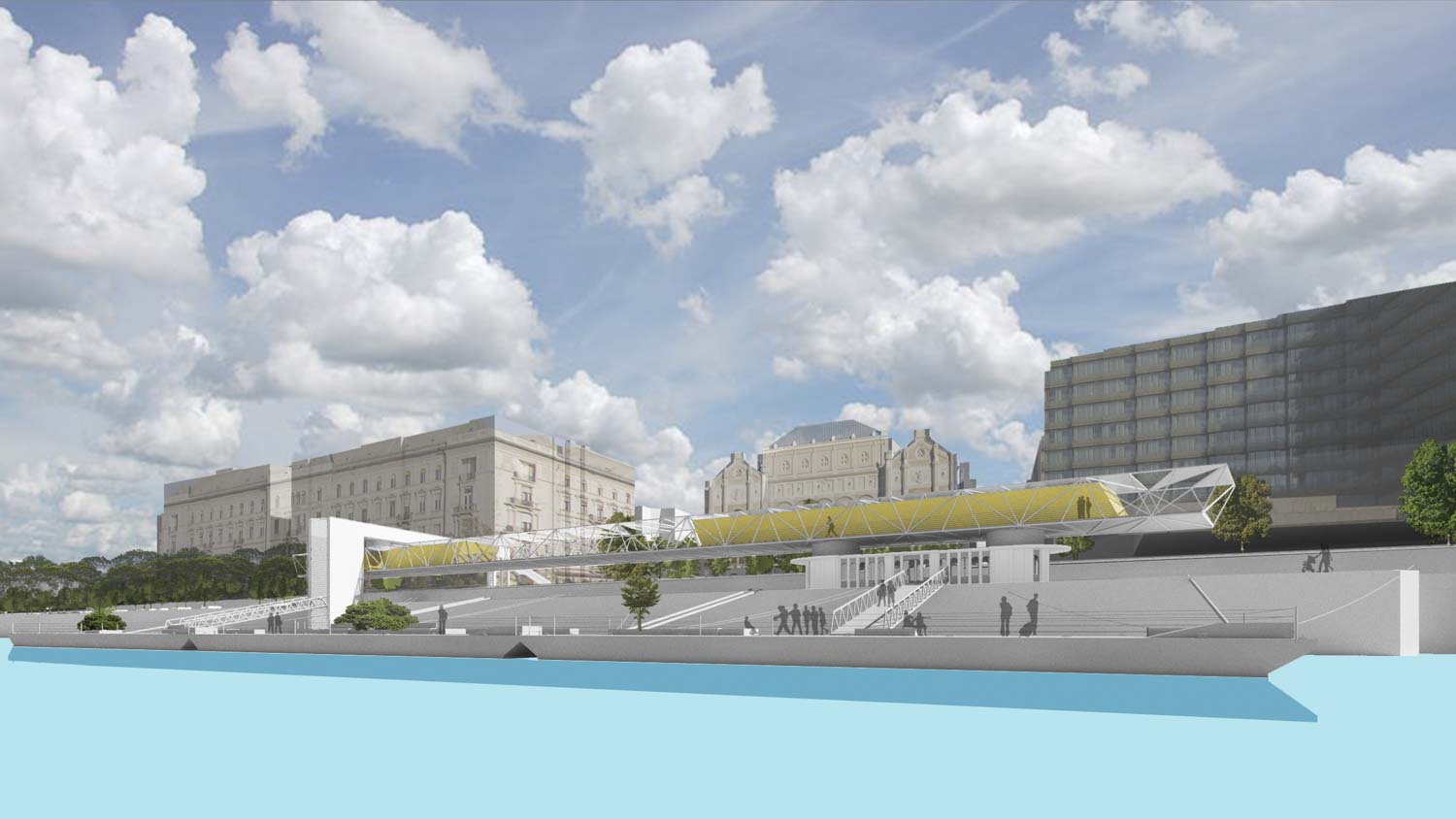
We looked for a new location for the International Ship Terminal and found the best possible area, which has been and still is one of the ship centers in Budapest. The building, planned to be in front of Vigadó Square and also functions as a floating waterfront observation deck, was designed in such a way that it will never be flooded. So, regardless of the water level, you will be able to admire the view of the Danube, Gellért Hill and Buda Castle, or even the beautiful Vigadó building from it all year round. Under the upstairs offices, the panoramic café and restaurant, there are buses that can transport passengers of the Vigadó Square – Várkert Bazár ferry that docks here, as well as the local, regional and international ships. We know that the station can be controversial, but we think that such a building is needed in Budapest.
We can only imagine hotel boats in front of waterfront hotels and on high, non-stepped bank sections, so that large boats do not obscure the view of the other side of the river from city dwellers and tourists. We have placed additional public spaces, smaller boat stations and catering units on floating piers – the exact function that is missing from each of the riverbank sections. We have also solved the water connection problem of Március 15. Square: the light observation terrace created here is a great continuation of the nice square, previously not connected to the water.
When redesigning the traffic system, we kept in mind that the capacity of the roads would not be reduced, and that, wherever possible, everyone could reach the riveside directly on foot from the city. We created a continuous pedestrian promenade on the riverside and bicycle lanes on both sides of the road, thus ensuring that different modes of use could be present simultaneously without disturbing each other.
Participated in the design:
Gergely Ámon, hydraulic engineer
Bence Falussy, visual designer
Melinda Hudák, transportation engineer
Cili Lohász, resident survey
Péter Nagy, architect
Szilvia Papp, landscape architect
Kata Kerekes, graphic designer
József Őrfi, architect
Dániel Sára, civil engineer
Levente Szczuka, urban planner
Klára Szerdahelyi Németh, urban planner
Dániel Attila Torma, transportation planner
Miklós Tömör, coordinator
Dávid Varga, architect
Blanka Varga-Kiss, landscape architect
Tibor Varga, landscape architect