The renovation of Nehru Part was completed in 2016, with Valyo participating in the developing of the concept and the designing of several elements.
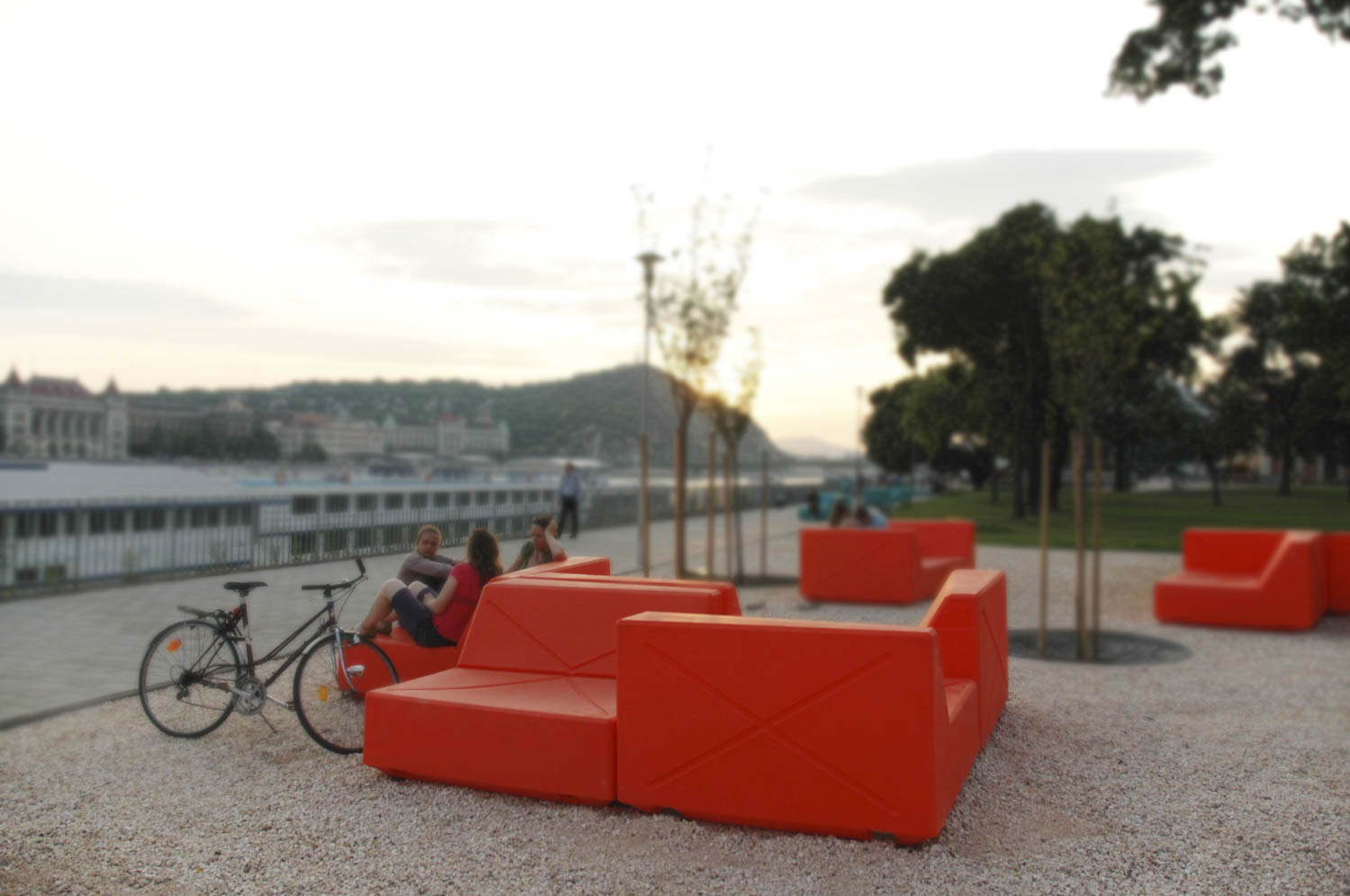
In 2013, the main location of the Danube Trail was the green area between the Whale Building and the Petőfi Bridge. We wanted to draw attention to the neglected area and started to look for deficiencies with development experiments. As with all public spaces, the lack of toilets was the most painful point, so we installed mobile toilets, built four giant sunbeds on site with the involvement of users, and we were organizing programs in the area. A discourse has begun on the potential development of the area.
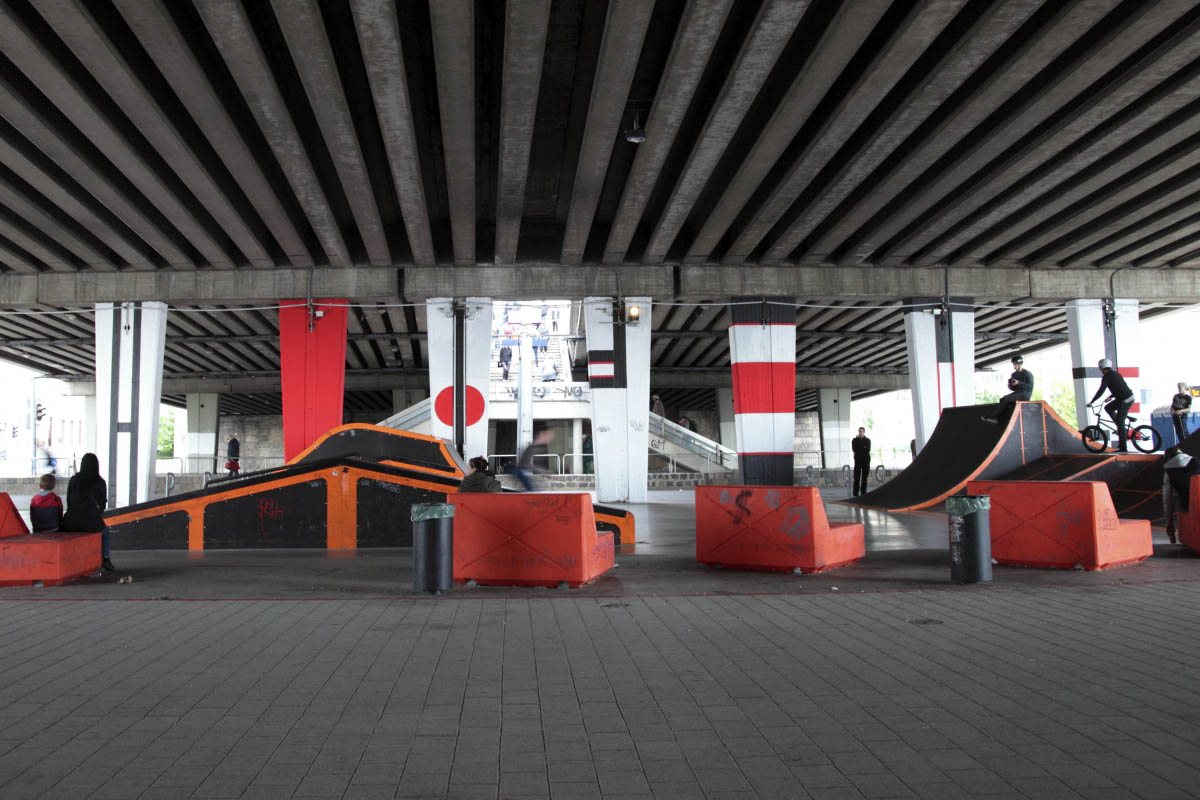
In the program, we started to work out the development concept for the area in cooperation with the Budapest Municipality and District 9. Besides developing the overall picture Valyo undertook five specific elements of the park design the development of the skatepark under the Petőfi Bridge, the development of public furniture, the elaboration of plans and operation of the restroom and service pavilion, the design of a community space connecting the Whale and Nehru Part and the development of the public space floating on the Danube.
After a long and difficult consultation and planning process in 2013, the project stalled. Three years later, as part of the Tér-Köz project, the park was renovated at a rapid pace according to our concept, but with many compromise solutions, including three elements designed by us.
The Petőfi skatepark has been a huge success. As the only covered public skateboarding park in Budapest it is in use all year around and at all times of the day.
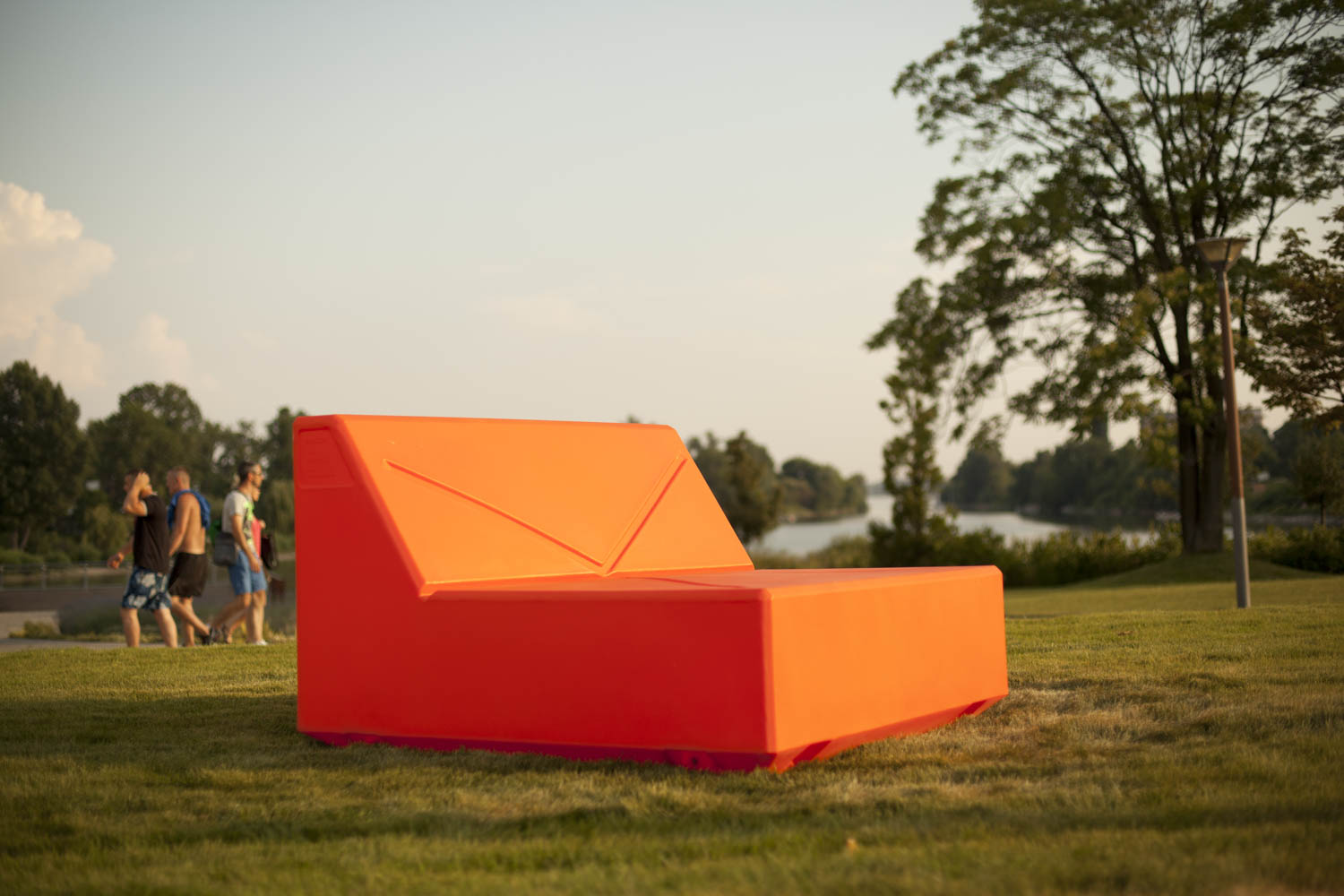
The BALLON benches we designed, made of plastic, could not be produced in sufficient quality due to tight deadlines. So, although their ergonomics and design are successful, they do not function properly because of cleaning difficulties and lack of maintenance. Meanwhile they add color to the park with their characteristic appearance.
The construction plans for the service pavilion were finalized by the Blokk architecture studio. The completed pavilion is currently waiting to be rented out, and we hope it will be put into operation soon.
The community space connecting the park and the Whale was removed from the plans. While the plan for the floating public square may be implemented in a later phase, the 11×40-meter-long supersized railway pontoon bridge selected as its base awaits its fate next to the Hajógyári Island.
The following interview with Sándor Finta, former chief architect of Budapest, about the Nehru project reveals many details about the development process.
Project participants: Gergő Kukucska, Dávid Varga, Miklós Tömör