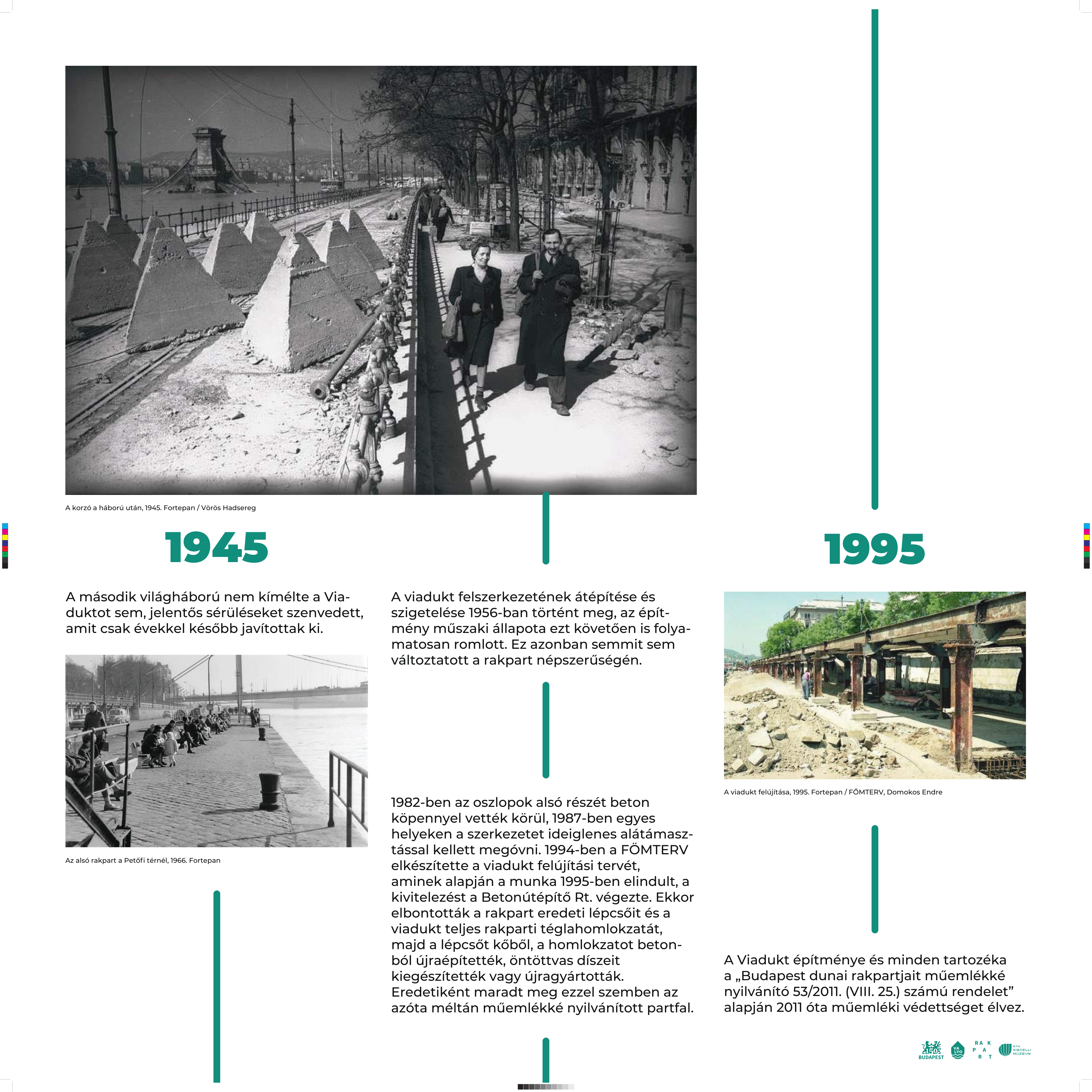
For several kilometres beneath Tram Line 2, locked doors conceal an extraordinary series of spaces stretching between the Chain Bridge and the Elisabeth Bridge. These vast rooms, closed off for decades, are now gradually being reclaimed.
Valyo Viaduct:
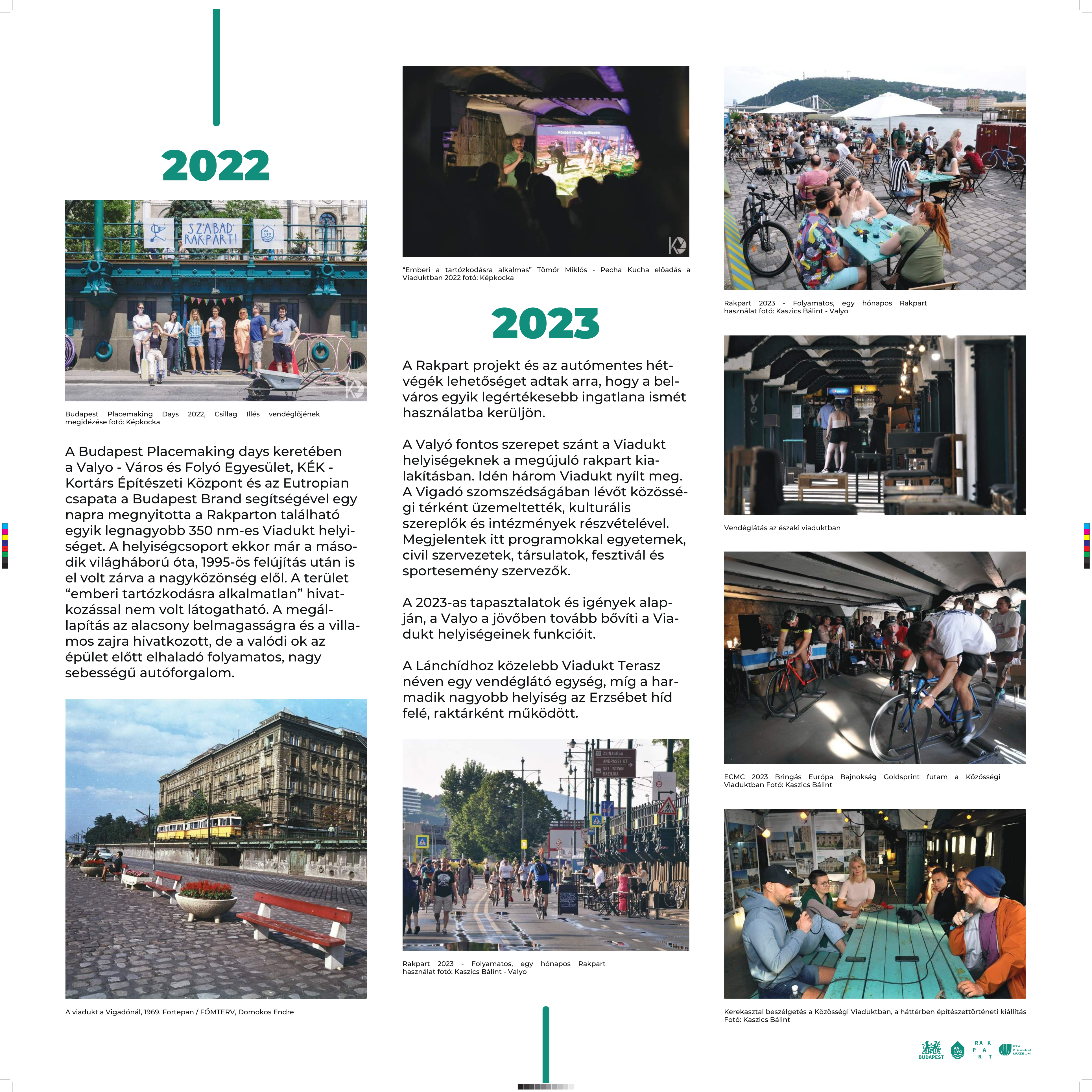
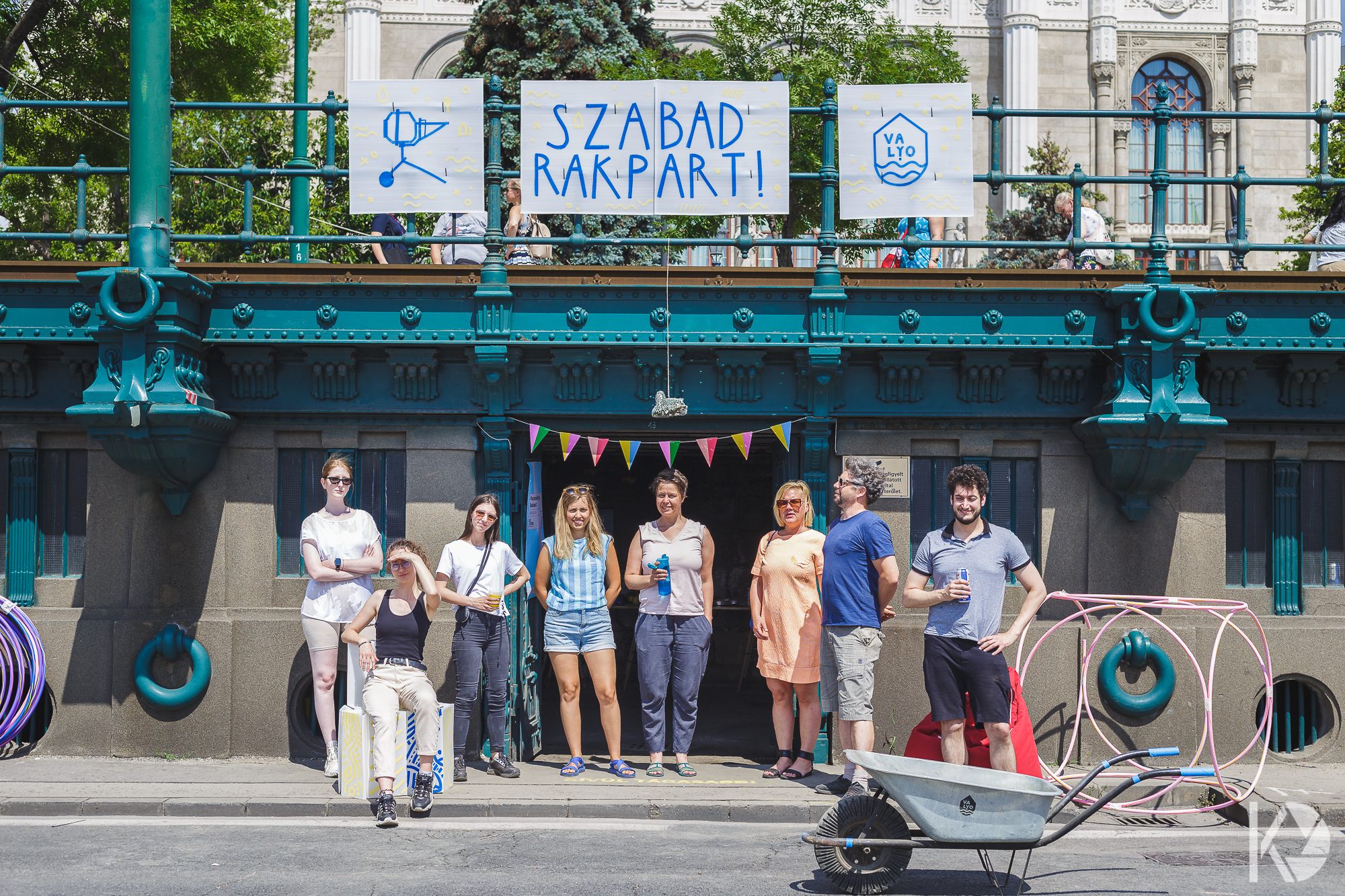
In 2022, as part of the Budapest Placemaking Days, we opened one of the largest viaduct spaces on the Danube Promenade—350 square metres—for a single day, in collaboration with KÉK – Contemporary Architecture Centre, the Eutropian team, and with the support of Budapest Brand. Although renovated in 1995, the entire complex had remained closed to the public since the Second World War. Officially, the area was deemed “unsuitable for human occupancy” due to low ceiling height and tram noise, though the real reason was the continuous high‑speed car traffic directly in front of the structure.
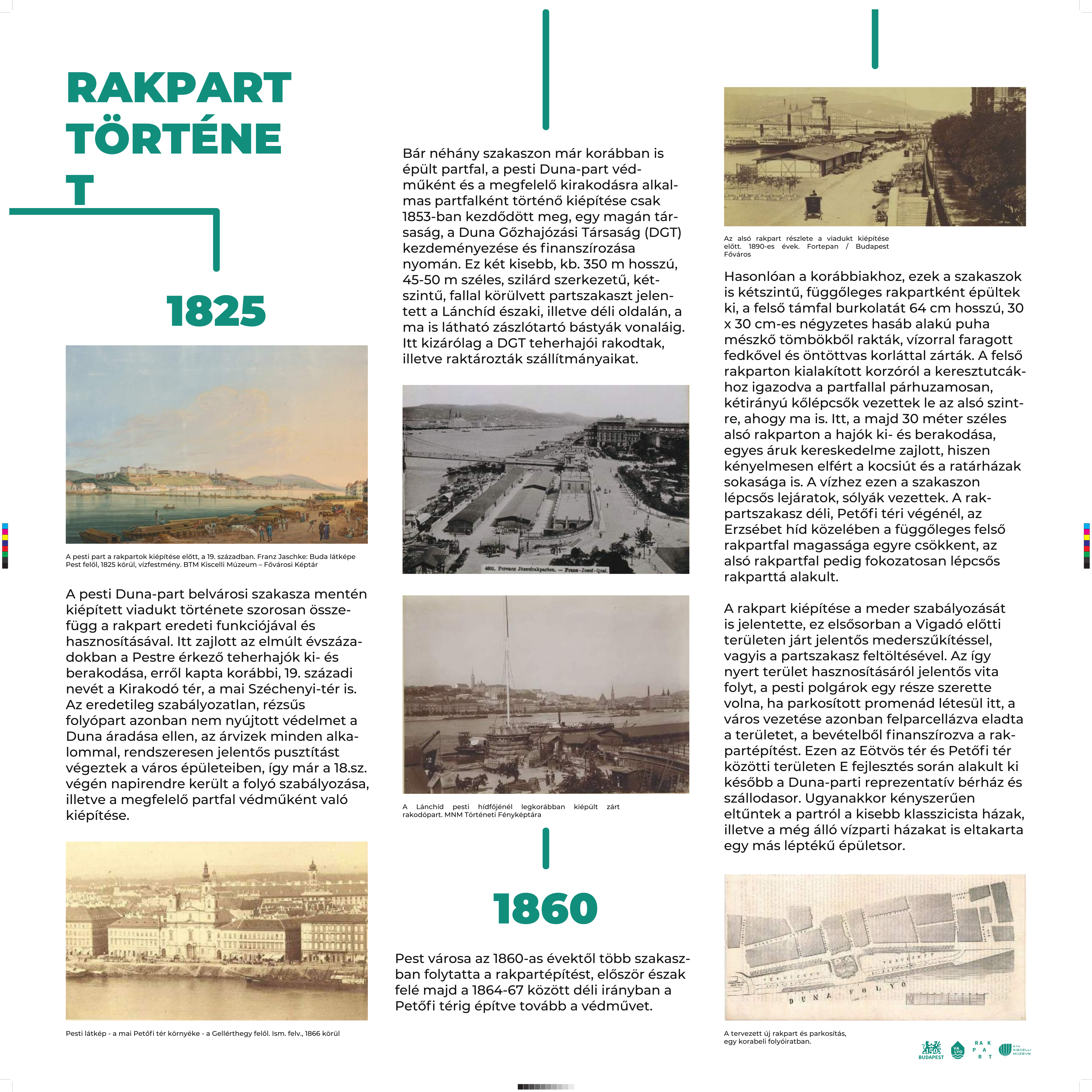
In 2023, the RAKPART project and the car‑free weekends created an opportunity to bring one of downtown Budapest’s most unique properties back into use. We envisioned an important role for the Viaduct spaces in shaping the renewed riverfront. Three Viaduct units opened that year. The one next to Vigadó operated as a community space, hosting cultural organisations and institutions. Universities, NGOs, theatre groups, festival organisers, and sports event planners all held programmes there. Closer to the Chain Bridge, the Viaduct Terrace functioned as a hospitality venue, while the third, larger unit towards the Elisabeth Bridge served as storage.
Based on the experiences and needs identified in 2023, we plan to further expand the functions of the Viaduct spaces in the future.
History of the Viaduct:
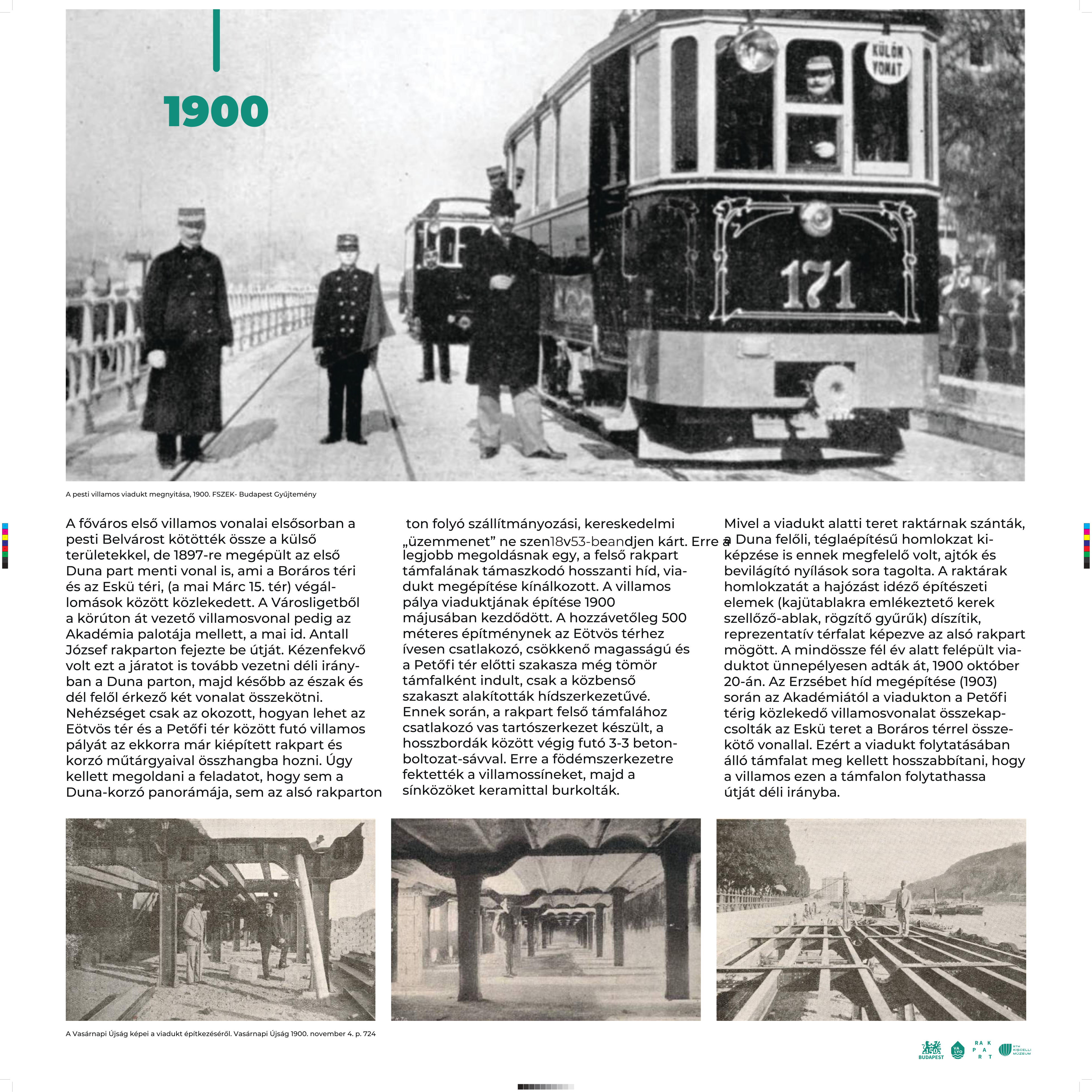
The tram viaduct along the Pest embankment was once a significant piece of Budapest’s infrastructure. Built at the end of the 1890s for the first tram line along the Danube, it connected Boráros Square with Eskü Square (today Március 15. Square), linking the riverfront to the inner city. Construction of the viaduct began in 1900; it formed a long elevated structure attached to the retaining wall of the upper embankment.
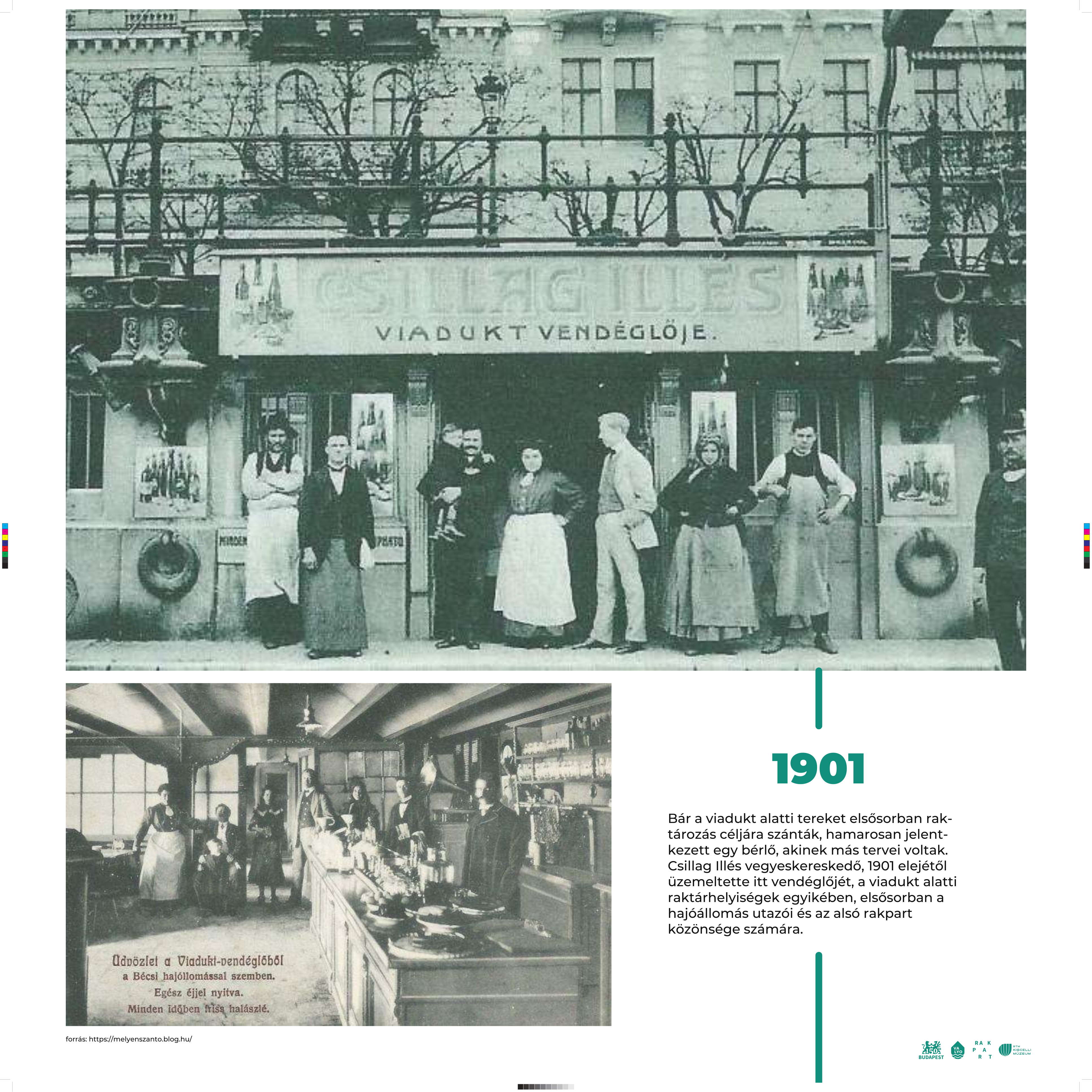
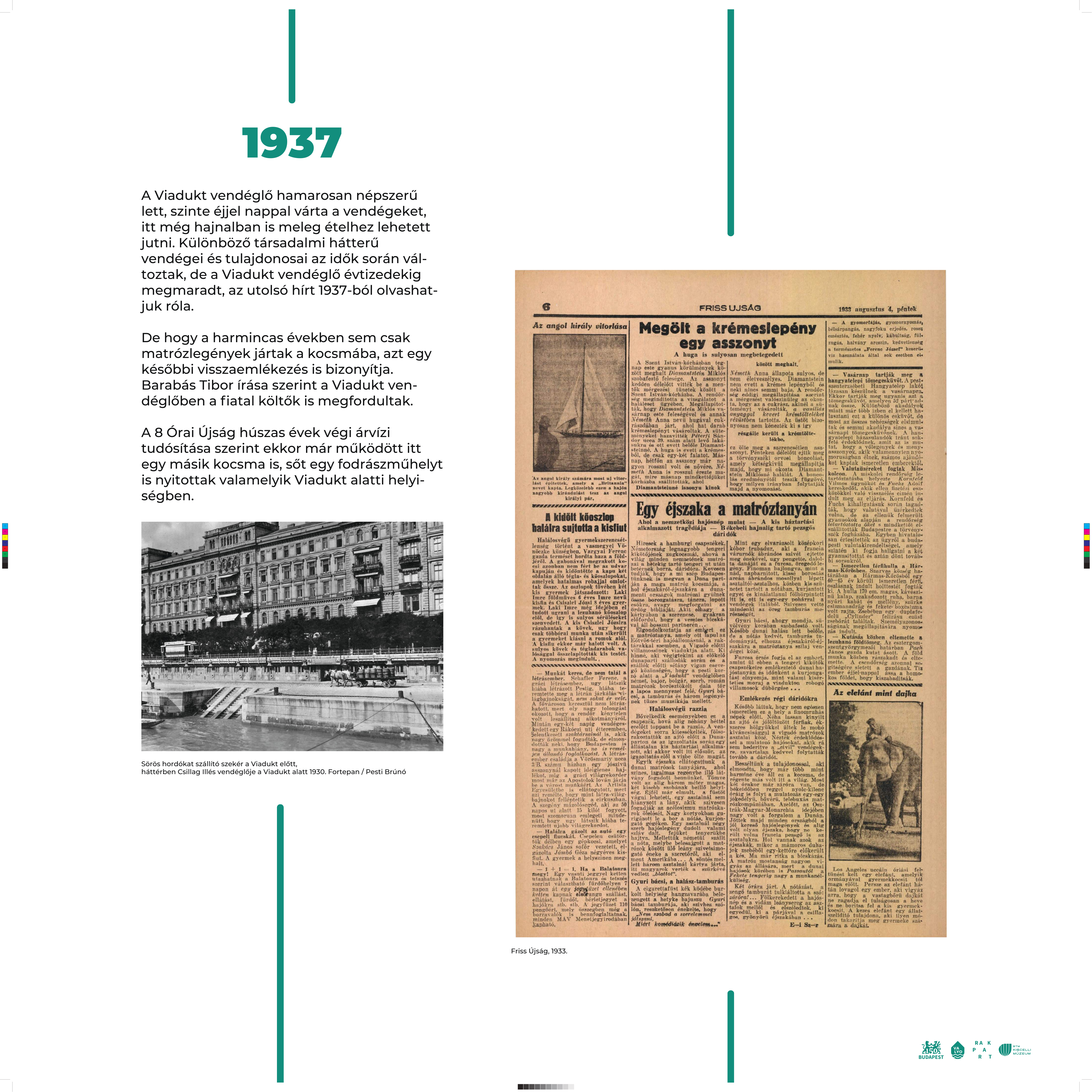
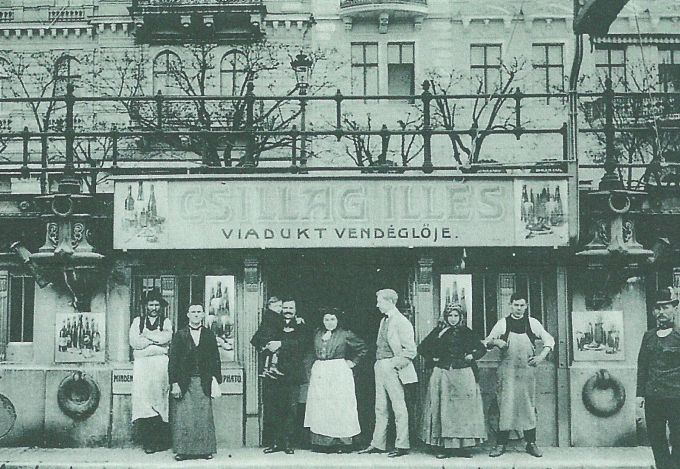
The space beneath the viaduct was originally intended for storage, but later a restaurant also operated there, becoming popular among city residents and visitors to the lower embankment. From early 1901, merchant Illés Csillag ran his restaurant in one of the storage rooms, serving travellers arriving at the nearby boat station as well as the riverfront crowd. The Viaduct Restaurant soon became a beloved spot, open almost around the clock, offering hot meals even at dawn. Over the decades, both its clientele and owners changed, yet the restaurant remained in operation for many years; the last known mention dates from 1937.
After the construction of the Elisabeth Bridge, the tram lines running on the viaduct were connected to other routes. The Second World War caused significant damage, but the structure later underwent partial repairs. In 1995, the viaduct was fully renovated: its façade and staircases were rebuilt, and it was granted heritage status. Since 2011, the structure and its components have been officially protected monuments, continuing to form a distinctive element of the Budapest riverfront.